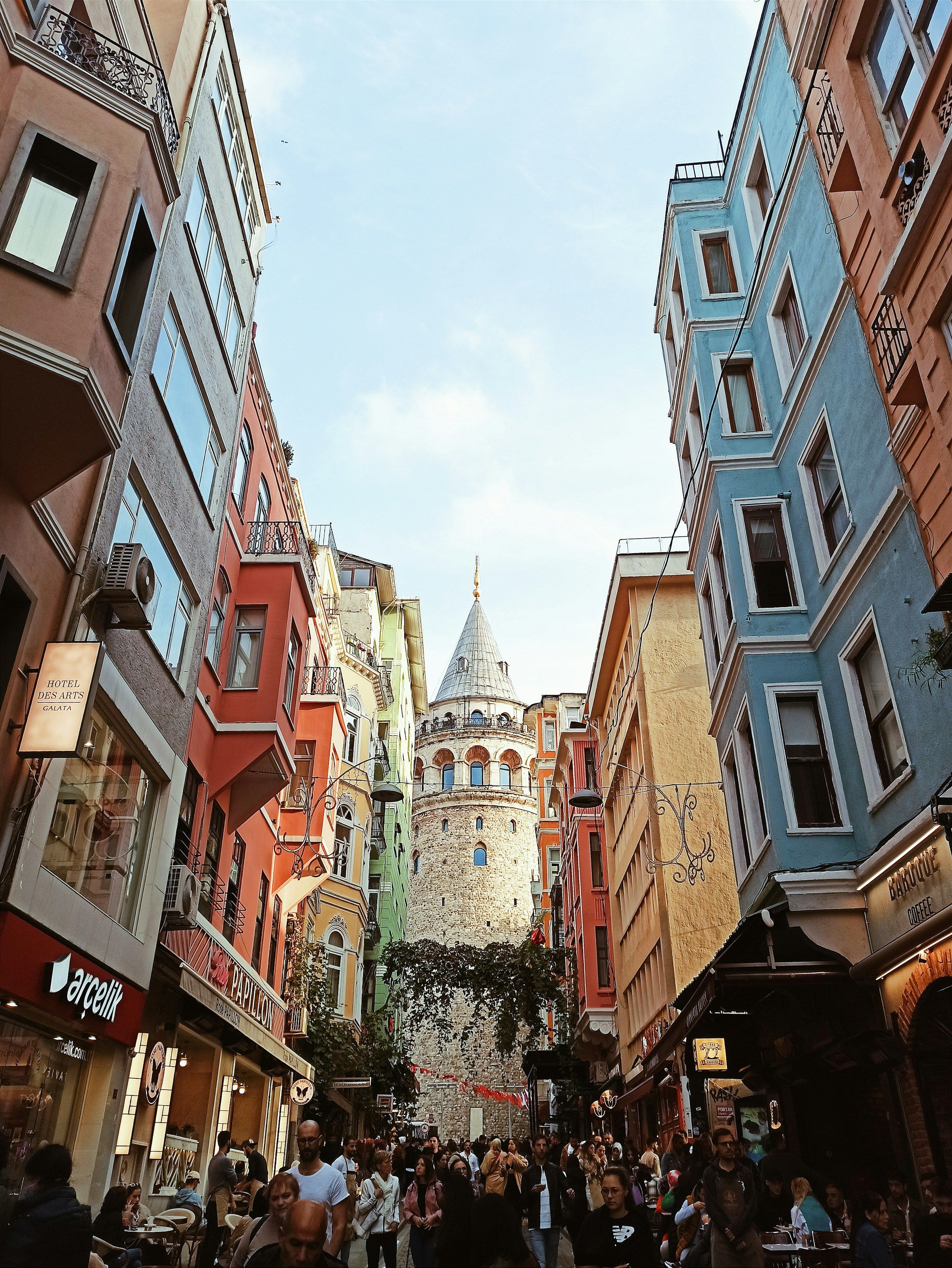
When we remember a city, monuments often come to mind first: a tower, a square, a bridge or a skyline. Postcards and travel guides tend to describe cities through these symbols. Yet much of what actually connects us to a place happens at a far smaller scale and is rarely photographed.
The width of a street, the height of a kerb, a doorway threshold, the smell of morning coffee, evening light on a facade, the distant sound of a ferry, the colour of stone after rain, a small corner shop or people who sit in the same place every day: urban memory comes less from the value of these details individually than from the rhythm they create together.
Character comes from repeated experience, not a single image
There is a significant difference between seeing a city once and beginning to live in it. A first visit is dominated by symbols; everyday life teaches distances, shadows, sounds, slopes, shortcuts and habits. The mental map gradually changes. The most important places stop being the famous monuments and become small nodes along personal routes.
The strength of good cities lies in allowing many such personal routes to emerge. They are not simply places to be observed but environments that can be inhabited at different speeds. The same street can produce a different experience for someone commuting in the morning, shopping in the afternoon or walking home at night.
What makes a city unforgettable is often not its icon, but the distinctive order of everyday life.
Why scale matters
Scale is one of the strongest tools of urban character. The relationship between building height and street width, the frequency of openings at ground level, the way trees create shade, how far shops can spill into the street or how long it takes to cross a square all shape the relationship between people and their surroundings.
A city experienced at walking speed needs detail. Streets where ground floors are closed, where entrances are mostly car ramps or where every block repeats the same setback quickly become monotonous. Small windows, thresholds, doors, awnings and changing uses can make even a short walk feel rich.
The tension between old and new
Memorable cities are rarely products of a single period. Buildings from different decades, different functions and different social groups create layers. Those layers may appear irregular or imperfect, but that imperfection produces a real sense of time.
Renewing every surface, standardising every facade or forcing streets into a single design language does not necessarily create quality. Even when renewal is necessary, it can be carried out without erasing all existing memory. The new does not need to imitate the old, but it should not behave as if the old never existed.
A city is not only physical
Architecture alone does not define urban character. Opening hours, local businesses, public transport, street music, markets, habits of using parks and even the social distance people keep from one another shape the experience of a place. The same physical environment can become a completely different city under a different social rhythm.
Protecting urban memory is therefore broader than preserving a handful of historic buildings. Everyday life must remain possible, small businesses should not disappear entirely, walkable routes need continuity and public space should allow people not only to pass through but also to stay.
Memory and change can coexist
Cities cannot and should not be frozen. Populations change, mobility evolves, new needs appear and economic structures shift. The real task is not to stop change but to prevent it from erasing the legibility of the city altogether. A new building can belong on an old street if its scale, ground-level relationship and treatment of public space allow it to enter into conversation with its surroundings.
New transport lines, pedestrian projects and public-space investments do not have to weaken memory either. Designed well, they can make older fabric easier to use and allow more people to experience it. Preservation and development are not necessarily a zero-sum relationship.
Urban memory is not a fixed object stored in a museum. It remains alive through use, reinterpretation and the everyday lives of new generations. A memorable city therefore does more than display its past; it allows the past to participate in the present.
Walkability strengthens memory
There is a strong relationship between how memorable a city is and how easily it can be walked. At walking speed, facades, shops, trees, changes in level and sounds connect into a continuous narrative. The same route travelled quickly by car often leaves only a few large landmarks in memory.
Walkability is more than pavement width. Safe crossings, protection from sun and rain, places to sit, accessible surfaces, active ground floors and the ability to reach different purposes within short distances all matter. The more time people spend on the street, the more contact they have with the details that give it character.
That contact produces attachment. A city often becomes “my city” not through its major monuments but through repeated small routes: buying bread from the same bakery, waiting at the same corner, watching the same tree change through the seasons. Repetition connects physical space to personal memory.
A memorable city is not simply one we look at, but one that can be lived in again and again in different ways. Character emerges where large symbols and small habits are allowed to exist at the same time.