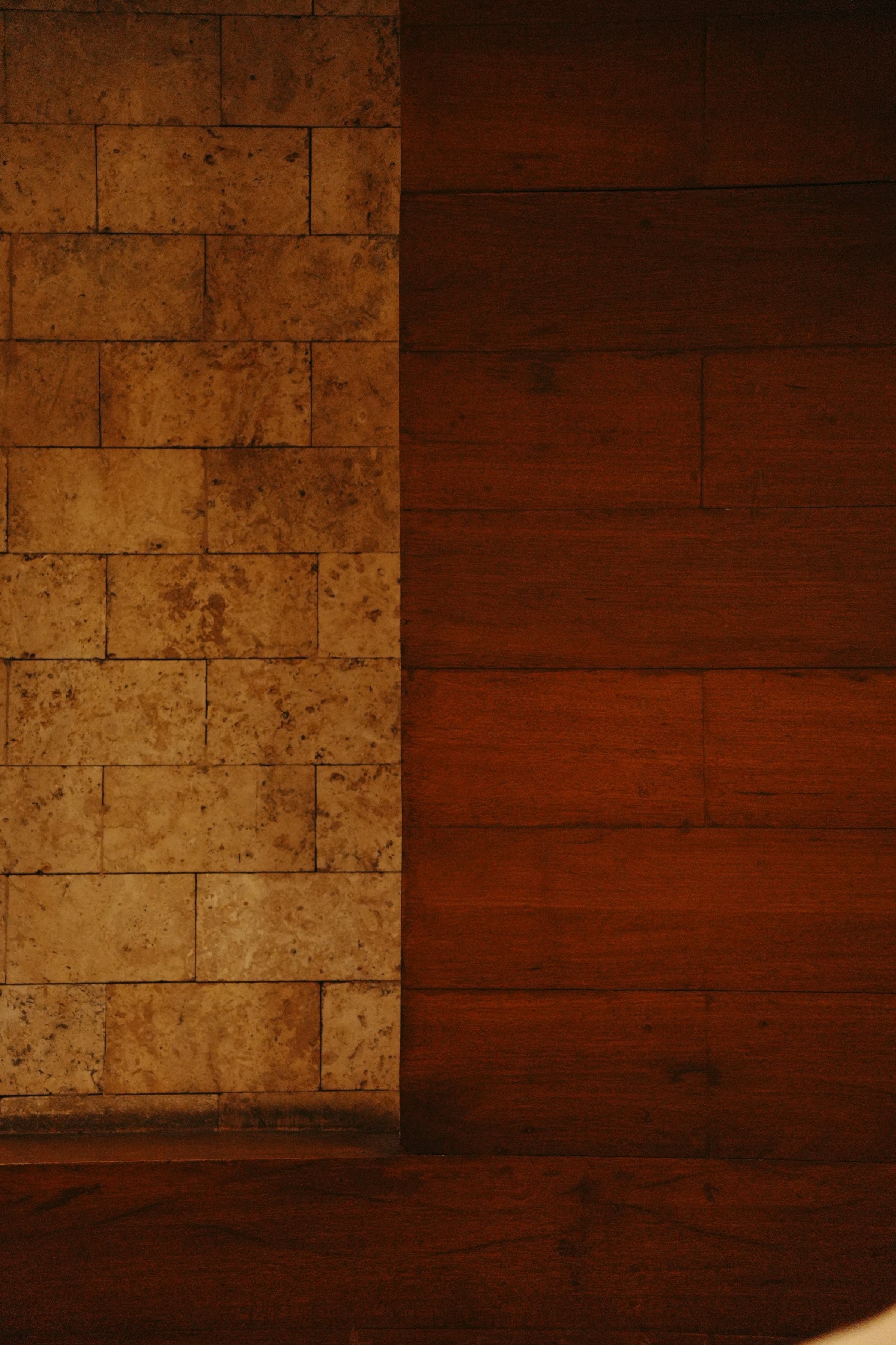
Expensive things are relatively easy to identify. Rare stone, hand-made objects, powerful brands, bespoke furniture and high price tags tend to announce themselves clearly. Refinement is harder to define because its value does not come from a single material, brand or visible feature. It emerges from the relationship between choices.
This is why expense and refinement are so often confused. Budget creates possibilities; it does not guarantee a result. A very expensive interior can still feel heavy, exhausting or quickly dated. A more modest space can feel far stronger when proportion, detailing and selection are coherent.
Price is a feature; judgment is an attitude
An expensive natural stone can overwhelm a room when used at the wrong scale. Rare timber can become ordinary through a poor junction. A hand-made object that competes with everything around it may create noise rather than reveal value. A more modest material, used in the right place and in the right amount, can establish a quieter but more convincing character.
Refinement begins with the question of “how much?” How much of a material is needed, where contrast should stop, how dramatic light should become, how visible a detail should be and how much space an object needs around it are decisions that have little to do with price.
Refinement is often less about how much is added than knowing when there is enough.
The price of a material and intelligence in using it are different things
Choosing material well is not simply selecting the most expensive surface in a catalogue. It means considering where it will age, be touched, receive sunlight, meet water, scratch or require repair. Marble behaves differently on a kitchen worktop than in an entrance hall. Brass gathers patina on a frequently handled door pull and takes on a different character when used as a decorative panel.
A refined result treats material not as a badge of prestige but as something that will live with use. Some surfaces are allowed to age; others are kept easy to replace. Luxury is no longer dependent on first-day perfection and can instead acquire character over time.
Craftsmanship does not have to be visible
Craftsmanship is sometimes associated with complexity. Yet in many of the most refined applications, effort is spent making the result appear simpler. A door aligning flush with a wall, a correctly resolved stone corner, continuous timber grain or light washing a surface without revealing its source are not spectacular gestures, but they define the quality of the whole.
Such details may not be obvious in a photograph. Spend time in the space, however, and they establish its coherence. Refinement is often felt less through the cost of individual parts than through the naturalness of the transitions between them.
Spectacle and character are not the same
Refinement does not require everything to be invisible or neutral. Strong colour, dramatic art, polished metal, expressive stone or an unusual piece of furniture can all belong in a refined composition. The question is not whether something attracts attention, but what role that attention plays within the whole. When every element tries to be the protagonist, richness becomes confusion.
The same distinction appears in clothing, graphic design, food, cars and even language. Expense is easy to signal; refinement often requires a little distance. It may not be obvious at first, but it remains comfortable on repeated encounters and becomes clearer with time.
Refinement reveals itself through repetition
Whether a space is genuinely refined is often clearer on the tenth use than on the first visit. The way a handle sits in the hand, how the edge of a table feels to touch, how fabric behaves after several months and how morning and evening light alter the room gradually reveal the true measures of quality.
Refinement is therefore not simply the production of an elegant first image. Solutions that remain easy to maintain, age with character and adapt to changing patterns of use create a deeper form of quality. A material is not the right choice because it is expensive; it becomes the right choice through the relationship it establishes with context and time.
There is also a difference between making a budget visible and using it effectively. Money may be better spent on hidden acoustics, a reliable hinge, better glazing, precise lighting optics or a long-lasting mechanism than on a spectacular surface. The user may never know the cost of those decisions, but will feel their comfort.
Selectivity is a budget strategy
Refinement often comes from concentrating a budget selectively rather than upgrading every line item. Instead of making every surface expensive, it can be more effective to invest in the few things people touch and experience most: a good floor, reliable door hardware, precise lighting, acoustic comfort or one carefully made piece of furniture. The budget gains impact by being focused where it creates character.
This also makes a project easier to read. Rather than disappearing beneath a large number of decorative gestures, a few strong decisions can carry the whole. The feeling of value is often determined less by how many expensive elements are present than by whether each has a clear reason for being there.
In genuine refinement, materials, craftsmanship and brand names are means rather than ends. The result does not need to defend itself with catalogue information; it becomes convincing through use. The user may never know where a stone was quarried, yet will notice how it ages, how a door closes and how comfortably light is distributed through the room.
Refinement is not a rejection of expensive things. It is a refusal to use them without reason, and an insistence on judging value through proportion, context, craftsmanship and behaviour over time.